
- What is sclerotherapy?
- How does sclerotherapy work?
- How long does sclerotherapy last?
- Does sclerotherapy hurt?
- What should you expect from a sclerotherapy visit?
- Am I a candidate for sclerotherapy?
Sclerotherapy treatment can make unsightly, uncomfortable varicose veins disappear in minutes.
Jean U., a recent patient of Vein Care Center of Amelia Island, says Gabor Kovacs, M.D., F.A.C.S., board-certified general surgeon specializing in vascular care, is a miracle worker.
“He made them all better. He made them disappear.”
What is Sclerotherapy?
Sclerotherapy is a proven medical procedure to eliminate varicose and spider veins. In the sclerotherapy procedure, the doctor carefully injects a solution directly into the problem vein. The solution, typically a salt compound, irritates the affected vein, causing it to collapse. Over time, the vein turns into scar tissue and fades away.
The sclerotherapy procedure itself has been around since the first part of the 20th century. Over time, the procedure improved and has become the accepted medical therapy to eliminate the raised, swollen blood vessels characterized by varicose veins and the smaller blue and purple veins known as spider veins.
These conditions often occur prominently on the legs, chest, or face, and they can be both painful and unsightly. Jean says, “I used to have pains in my legs all the time. Now, that leg is good.”
How Does Sclerotherapy Work?
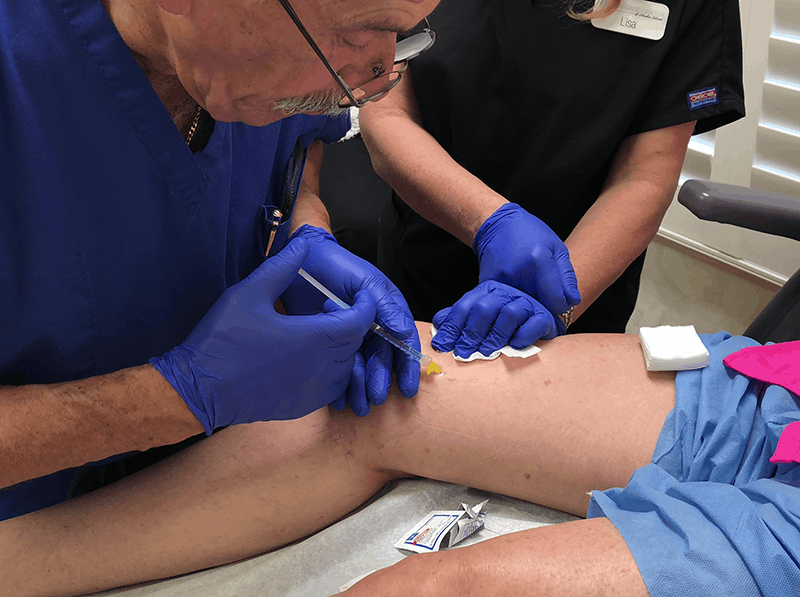 To understand sclerotherapy, you must first understand how spider and varicose veins form. Spider and the more severe form of vein disorder, varicose veins, often appear on the legs of the affected person. A spider or varicose vein can occur when the tiny valve within the vein malfunctions. Normally, blood flows in one direction through the body and back to the heart. When the vein valve malfunctions, blood can flow backwards and pool within the vein. That puts pressure on the vein, making it bulge and throb. Over time, these veins show up just under the skin and they can be both unsightly and painful.
Jean says, “I go to water aerobics every day, so I’m in and out of the pool. I just wanted to have better looking legs and ones that didn’t hurt anymore.”
The sclerotherapy procedure gives patients like Jean a way to look and feel their best by eliminating uncomfortable and disconcerting varicose and spider veins.
How Long Does Sclerotherapy Last?
Jean’s first sclerotherapy appointment was 30 years ago, so that gives you a sense right away of how effective these treatments can be and how long they can last.
Each person is different, however. One thing to note is that, while the sclerotherapy treatment is highly effective, people that are prone to varicose or spider veins may have new problem areas crop up over time. Sometimes this happens within a few years, and sometimes it may take decades.
Does Sclerotherapy Hurt?
Since sclerotherapy requires injections through the skin and into the vein, it is not a completely painless process. Sometimes the chemicals injected into the vein can cause a stinging sensation. You may experience some bruising or swelling after the treatment. All of these side effects should disappear in a few days and over the counter pain relievers and ice packs can help with any discomfort you feel.
Given that many patients complain that their varicose veins itch, burn, throb, and swell, the sclerotherapy procedure is a preferable, safe, and effective treatment for eliminating chronic pain from your varicose veins.
What Should You Expect from a Sclerotherapy Visit?
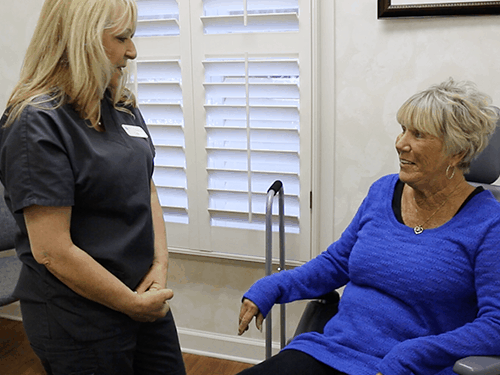 During your first visit, Dr. Kovacs and the team will make you feel at home while conducting a general exam and history to determine the best treatment for your condition. Jean says, “They made me feel so comfortable. It was like dealing with the family doctor. They’re just very warm, nice people.”
If you and the doctor select your sclerotherapy procedure, it can be done in the clinic itself as an outpatient procedure. The steps during sclerotherapy typically include:
- You will lie on the medical exam table
- If your legs are being treated, the doctor will elevate them
- The doctor will inject a chemical substance into the vein which seals it off and allows it to be reabsorbed into the body
- You may feel a pinch when the needle is inserted or a slight stinging
- The area is massaged to spread the substance
- You will be observed for a few minutes
- Then you’ll get up and walk around to help blood flow
- You may be asked to wear compression stockings and avoid sun exposure
This entire process takes about 10 to 15 minutes. Recovery from this procedure is very fast, but it does take a few weeks for the targeted veins to disappear.
Jean says, “They always called to check on me after every procedure.”
Sometimes if the varicose vein is particularly large and troublesome, you may need several treatments to make it disappear.
Are You a Candidate for Sclerotherapy?
If you’re suffering from the pain of varicose veins or are embarrassed by the spider or varicose veins on your legs or another part of your body, you may be a sclerotherapy candidate. Sclerotherapy is a safe, proven treatment for these conditions both as a cosmetic and medical procedure.
After her treatment, Jean says, “I just feel better about myself.”
Good candidates for sclerotherapy are patients who are between the ages of 30 to 60 and lack a medical history of blood clotting issues. They should be generally in good health and have not given birth or been pregnant in the past three months. These patients should also closely follow the doctor’s instructions both before and after treatment.
Dr. Kovacs and the team at Vein Care of Amelia Island have performed hundreds of these procedures successfully on patients like Jean.
She says, “I would highly recommend Vein Care of Amelia Island.” If you are suffering from uncomfortable vein issues, please schedule an appointment today.